How to Choose the Right Web Development Solution for Your Business (Without Getting Burned)
Three quotes, three prices, zero questions asked. Here's how to evaluate a web development solution for your business before you sign off on one.

Debajoyti Paul
Design Engineer
August 23, 2026
6 min read
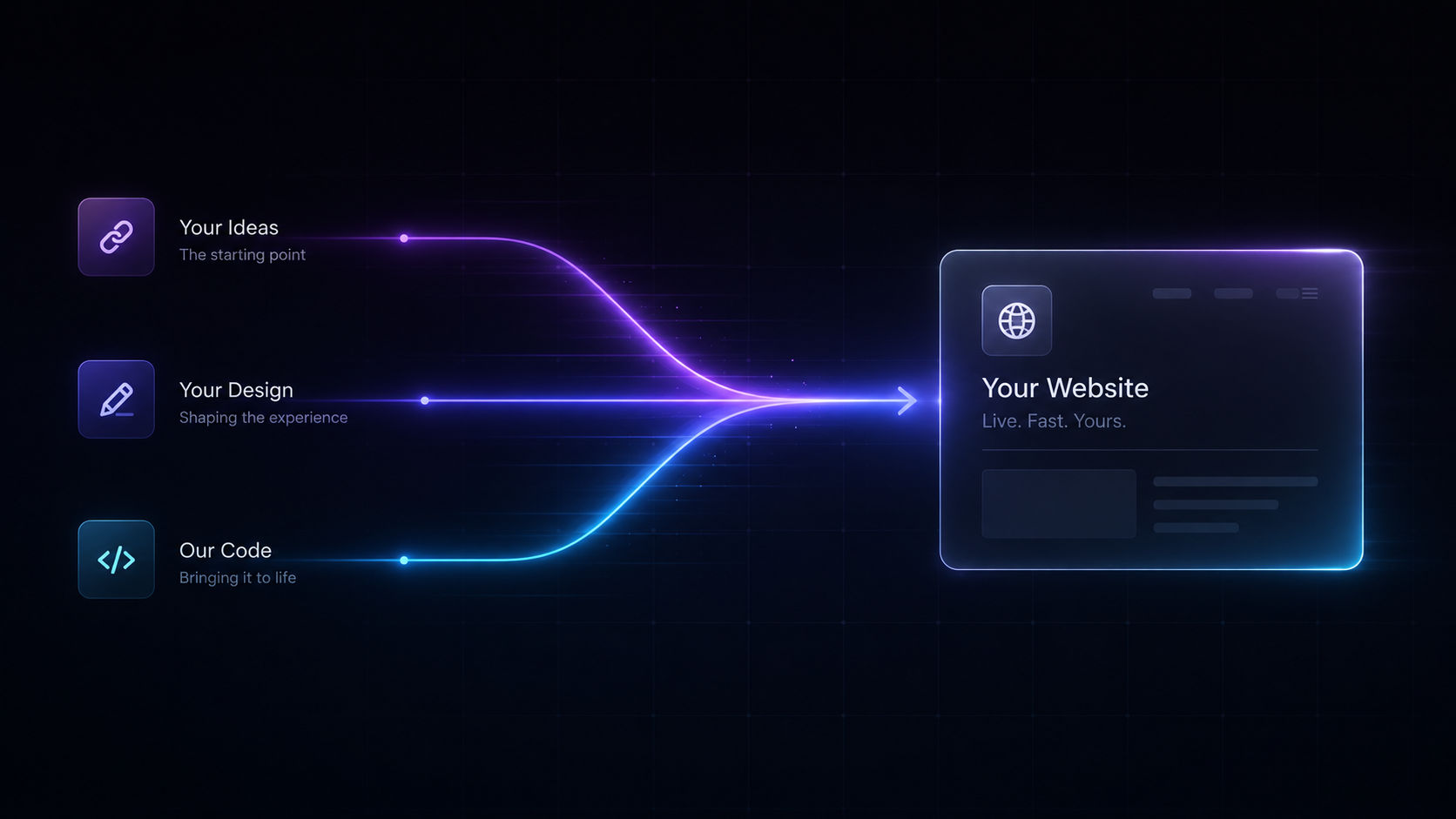
Your inbox has three quotes in it right now. One agency wants ₹80,000 and six weeks. One freelancer on a marketplace is offering ₹8,000 and "3 days delivery." A cousin's friend who "does websites" said he'd throw something together over the weekend. None of them have asked what your business actually needs the site to do, and that's the real problem.
Most business owners don't struggle to find someone who can build a website. They struggle to find the right web development solution for your business: one that actually brings in enquiries, ranks locally, and doesn't fall apart the first time you want to change a price or add a product. If you're an entrepreneur or small business owner weighing your options right now, here's how to think about it properly.
Start With the Job the Website Has to Do
Before comparing developers, get specific about the outcome. "I want a website" isn't a brief; it's a wish. A local shop needs foot traffic and phone calls. A B2B service business needs credible case studies and a contact form that doesn't get ignored. A product brand needs a clean checkout and fast load times so people don't bounce before they buy.
Write down the one or two actions you want a visitor to take. Every design and technical decision (from the homepage layout to which pages get built first) should trace back to that action. A developer who asks about this before quoting you a price is worth more than one who jumps straight to "sure, I can build that."
Understand What You're Actually Choosing Between
Three broad paths show up in almost every quote you'll get:
No-code builders (Wix, Squarespace, Shopify): fast, cheap, fine for a very simple presence, but you'll hit a ceiling fast if you need custom functionality, real SEO control, or a design that doesn't look like a template.
WordPress with a custom theme: the middle ground. You get a real content management system your team can update themselves, strong SEO fundamentals, and design flexibility, without the cost of a fully custom build. This is where most small-to-mid businesses land, and it's underrated for how far it can go when it's built properly instead of stitched together from plugins.
Fully custom development (React/Next.js style builds): the right call when you need something a template genuinely can't do: a dashboard, a booking system, a multi-tenant platform, or a brand experience that has to feel distinct in a crowded market.
None of these is universally "better." The mistake is picking based on budget alone and backing into a technical decision that doesn't match what the business needs a year from now.
Ask These Questions Before You Say Yes to Anyone
Who updates the site after launch, you or them? If the answer is "call us every time," ask what that costs long-term.
Is local SEO part of the build, or a separate line item you'll forget to ask about? A beautiful site that doesn't show up on Google Maps for "your business near me" searches is a brochure, not a growth channel.
Can they show you something they've actually shipped, not just a portfolio mockup? Ask what it was built to achieve and whether it worked.
What happens if you want to change something in six months? A rigid, hard-coded site is expensive to touch later. A well-structured CMS or component-based build isn't.
Why "Cheap and Fast" Usually Costs More Later
The ₹8,000-and-three-days offer isn't wrong because the price is low, it's risky because speed and price usually come at the expense of the things you can't see on day one: page speed, mobile responsiveness, on-page SEO structure, and whether the code is maintainable at all. I've taken over enough half-finished builds to know the pattern: the client saved money upfront and then paid twice, once for the rebuild, and once in the enquiries they never got because the site wasn't findable or trustworthy.
This showed up directly in a local SEO project I did for an optical shop in Shyamnagar. The win wasn't a flashier design; it was pairing a proper WordPress build with Google Business Profile setup and local SEO groundwork so the shop actually showed up when people nearby searched for glasses. That's the kind of decision that doesn't show up in a template comparison but makes or breaks whether the site earns its cost back.
Set a Realistic Budget and Timeline First
Most of the frustration in this process comes from comparing quotes that aren't actually comparable. An ₹8,000 marketplace offer and an ₹80,000 agency proposal aren't two prices for the same product; they're two different products wearing the same label. Before you request quotes, decide roughly what you're willing to invest and what you expect back from it. A simple, well-built WordPress site for a local business might realistically run a few weeks and a modest budget. A custom platform with logins, dashboards, or e-commerce logic is a different scope entirely, and any quote that promises that in a few days is telling you something about the corners it's planning to cut.
The same goes for timelines. A rushed launch date can be a red flag as often as it's a convenience: ask what gets skipped to hit it. Testing across devices, writing proper meta descriptions, setting up analytics, configuring the contact form to actually deliver enquiries to your inbox: these are the unglamorous steps that get dropped first when a build is rushed, and they're exactly the steps that determine whether the finished site does its job.
Red Flags Worth Walking Away From
No questions about your business, your customers, or your goals before a quote lands in your inbox.
No mention of SEO, mobile performance, or who owns the code and hosting after launch.
A price so low it can't possibly cover proper testing across devices and browsers.
Communication that goes quiet the moment the deposit clears.
What Good Looks Like Instead
A good web development solution for your business starts with a real conversation, not a template. A good partner treats the first call like a discovery call, not a sales pitch. They'll ask what "success" looks like for your business, push back if a request doesn't serve that goal, and give you a straight answer about timelines and what's realistic for your budget, rather than just agreeing to everything to close the deal. Whether that ends up being a custom-themed WordPress build, a fast React/Next.js site, or something leaner, the process should feel like they're building your business a tool, not just handing you a template with your logo on it.
If you're currently comparing quotes and something about this rings a bell: a developer who hasn't asked what your site needs to achieve, or a build that's starting to feel like it's for their portfolio instead of your customers, it's worth pausing before you sign off. Have a look at recent work or get in touch directly to talk through what your site actually needs to do.
Related Reading
Is Your Website a Security Risk? What Small Business Owners Actually Need to Check
Is your website a security risk? Most small business owners have never once checked. Here's what actually makes a site vulnerable, what it costs if it goes wrong, and the 10-minute audit you can run today.
Do You Need a Mobile App, or Just a Faster Website?
Do you need a mobile app, or just a faster website? Most small businesses default to "we need an app" when a fast, installable site would actually solve the problem for a fraction of the cost.
Written by
Debajoyti Paul
Freelance design engineer with 3+ years building high-converting Next.js and WordPress sites for startups and small businesses.
More about me →