Do You Need a Mobile App, or Just a Faster Website?
Do you need a mobile app, or just a faster website? Most small businesses default to "we need an app" when a fast, installable site would actually solve the problem for a fraction of the cost.

Debajoyti Paul
Design Engineer
August 5, 2026
6 min read
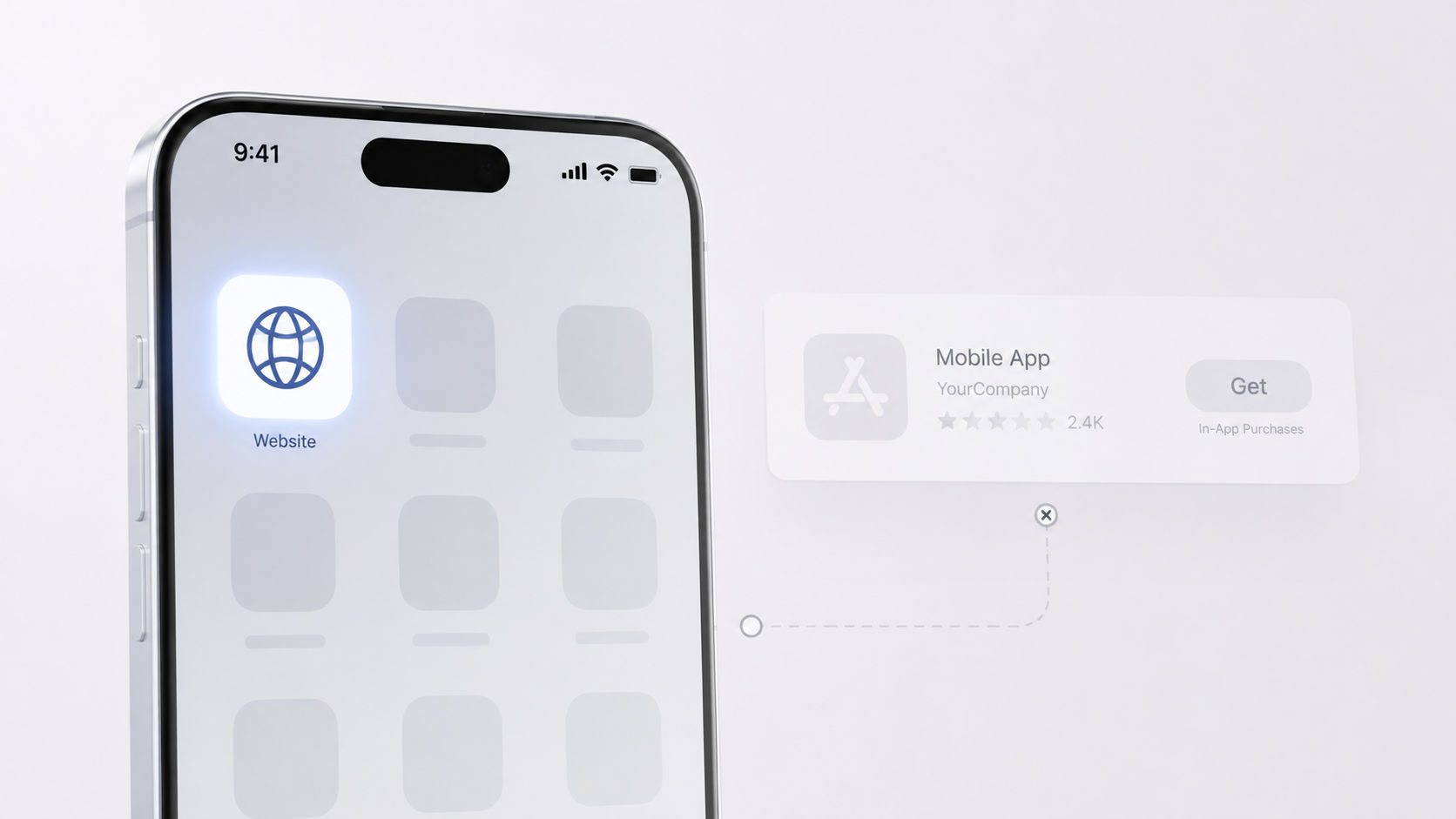
Do you need a mobile app, or just a faster website? Most small business owners never actually ask this question. They jump straight to "we need an app" the moment a competitor mentions theirs. Nobody checks whether an app solves a real problem, or just adds a new one.
Here's the uncomfortable version of the answer. Most small businesses don't need a native app. What they need is a website that behaves like one. It should load instantly, work offline, and sit right on the home screen. It shouldn't force a customer through an app store download before they've even decided if they like you.
Do you need a mobile app, or just a faster website? Start with what an app actually costs you
An app isn't one project. It's two. One for iOS, one for Android. Each one gets built and maintained separately, forever. Industry cost estimates put a Progressive Web App anywhere from 30 to 70 percent cheaper to build and maintain than two native apps running in parallel. That gap isn't a rounding error for a small business. It's the difference between a project you can actually afford and one that quietly drains your budget every time either platform pushes an update.
A PWA is, at its core, a website. One codebase. One team. One thing to maintain. It still gets you an icon on the home screen, offline access, and push notifications. Those are the exact features most business owners actually want when they say "we need an app."
Why most business apps never even get used
Here's the part that doesn't make it into most pitches. Getting someone to open an app store, search for your name, and tap install is a genuinely hard sell. Even customers who already like you won't bother. One industry report found that 71 percent of custom business apps fail within their first year. Not because they were badly built. Because almost nobody downloaded them, or the few who did never opened them again.
Loyalty programs make the pattern obvious. Ask a customer at checkout to download an app for a stamp card. Most will smile, say they'll do it later, and never will. It's not that the reward isn't good enough. A download is a wall, and most people won't climb it for a punch card. The same resistance shows up for restaurant ordering apps, salon booking apps, and local service apps across the board.
One app-development veteran puts it plainly: downloads aren't the success metric, retention is. A download that never gets opened again isn't really a user gained. It's just a statistic.
What a fast, installable website actually gives you
This is where the PWA trend matters. A well-built PWA can be added to a phone's home screen with one tap. No app store, no install screen, no permission requests most people distrust anyway. It loads fast, works with limited or no connection, and can send push notifications the same way a native app does.
On performance, the gap has mostly closed for anything that isn't graphics-heavy. Well-optimized PWAs typically run at 45 to 55 frames per second on modern devices. Native apps sustain a steady 60. That's close enough that the average customer booking a table or checking your hours will never notice the difference.
For a local business, a service provider, or an e-commerce store, that covers the entire job. Fast loading. An icon on the home screen. Notifications for order updates or appointment reminders. All without asking anyone to sit through an app store download first.
When you genuinely do need a native app
This isn't an argument that native apps are pointless. Some businesses actually need one. If your product relies on high-end device capabilities, think camera-based AR, biometric authentication, or real-time GPS navigation, a website can't fully replace that. The same goes for regulated industries like fintech or healthcare, or businesses that depend heavily on app store discovery for new customers.
The honest test is whether your business genuinely needs those capabilities today. Or whether "we need an app" is really just a stand-in for "our website feels slow and dated." For most small businesses, it's the second one.
A quick way to check which one you actually need
Before you brief a developer on either option, run through this in a few minutes.
Open your current website on your own phone. Time how long it takes to load. If it's slow, that's often the actual complaint people are describing when they say "we need an app." A fast site with a home-screen icon usually fixes it.
Ask yourself how often a typical customer interacts with your business. Daily, habitual usage favors an app-like experience. Occasional visits, booking a service, checking hours, placing an order once a month, rarely justify the friction of an app store download.
List the specific device features your business genuinely depends on: camera, GPS, biometrics, offline-first data. Be honest about whether that list is actually empty.
Check whether your competitors' apps have meaningful download and usage numbers, or whether they're sitting in app stores mostly unused. That tells you more about real customer appetite in your market than any pitch deck will.
If most of your answers point toward occasional visits, no special device needs, and quiet competitor apps, a fast, installable website is very likely the better use of your budget.
The real question to ask before you commit to either
Before spending a native app's budget on a native app, ask a more specific set of questions. Does your business actually need offline camera access, biometric login, or GPS tracking? Or would a fast, installable website cover what your customers actually do?
Are you really trying to solve "our website is slow"? An app won't fix that. It'll just hide the real problem behind a bigger budget. And realistically, will your customers download a dedicated app for what you offer? Or would they rather have quick, reliable access from wherever they already are, a browser?
For the overwhelming majority of small businesses, the honest answer is a faster, installable website. Not a second product to build and maintain forever.
If you're weighing this decision right now, that's exactly the kind of conversation worth having before committing budget to either direction. I build fast, modern websites on React and Next.js that can be set up as installable, app-like experiences from day one, without the overhead of maintaining two separate native codebases.
Related Reading
How to Choose the Right Web Development Solution for Your Business (Without Getting Burned)
Three quotes, three prices, zero questions asked. Here's how to evaluate a web development solution for your business before you sign off on one.
Is Your Website a Security Risk? What Small Business Owners Actually Need to Check
Is your website a security risk? Most small business owners have never once checked. Here's what actually makes a site vulnerable, what it costs if it goes wrong, and the 10-minute audit you can run today.
Written by
Debajoyti Paul
Freelance design engineer with 3+ years building high-converting Next.js and WordPress sites for startups and small businesses.
More about me →