Website Maintenance Cost: How Much Should You Budget Every Year?
Website maintenance cost is easy to skip until something breaks. Here's what it actually covers, realistic price ranges, and how to budget for it right.

Debajoyti Paul
Design Engineer
July 19, 2026
6 min read
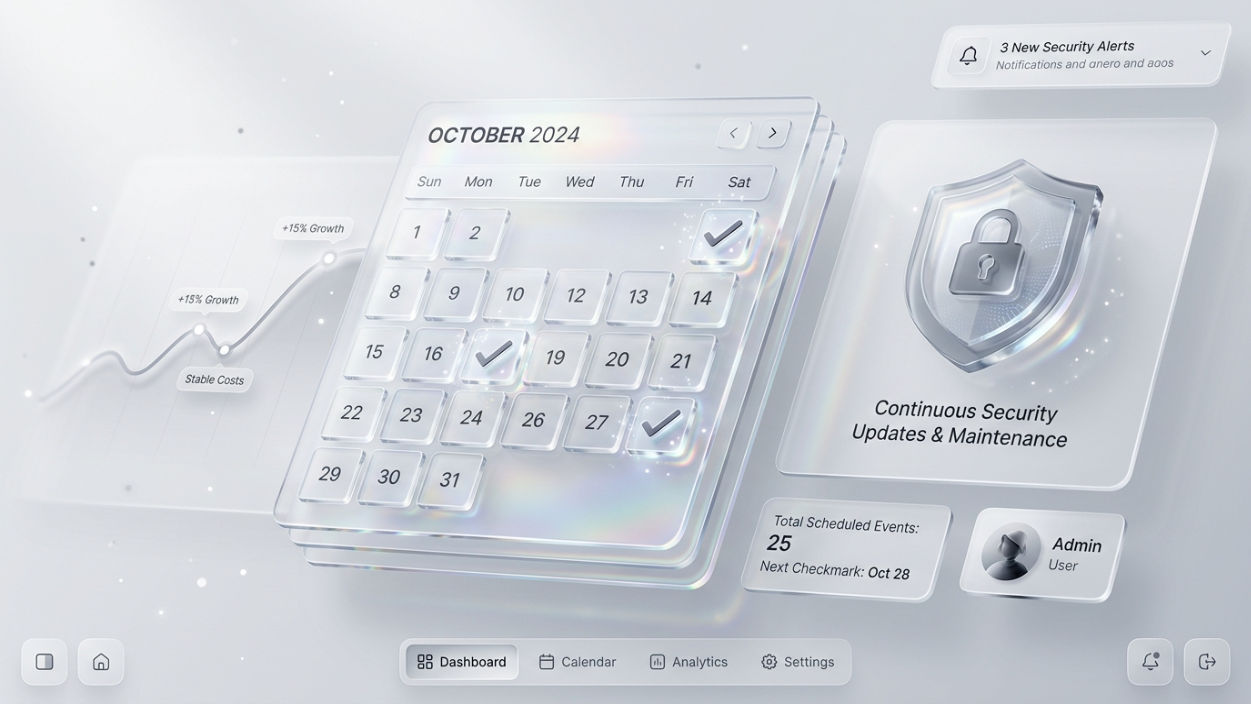
A website isn't a purchase you make once. It's closer to a car. You don't just buy it and forget it exists for the next five years. It needs fuel. It needs service. It needs the occasional repair, or it slowly stops working the way you need it to. Most business owners never budget for that ongoing part. Nobody mentioned it during the build. Then they're caught off guard a year later, wondering why the site feels slower, looks broken in places, or got flagged by a browser for being insecure. If you've never actually worked out website maintenance cost as part of owning a site, you're not alone. But it's worth fixing before it becomes an emergency instead of a line item.
Why Maintenance Isn't Optional, Even If Nothing Looks Broken
A website that "still works" today can quietly stop working over the next twelve months. That can happen without a single line of your own content changing. Plugins and platforms release security patches. Browsers change what they support. Payment processors update their APIs. None of that requires you to do anything, until the day it does. Usually that day arrives at the worst possible time, like when a security vulnerability gets exploited or a plugin update breaks your checkout page. Maintenance is what catches these before a visitor does.
What Actually Falls Under "Website Maintenance"
The term covers more ground than most people expect going in. It typically includes:
Security updates and patches for the platform, plugins, and any third-party integrations
Regular backups, so a hack, a bad update, or a hosting failure doesn't mean starting from zero
Uptime monitoring, so downtime gets caught in minutes instead of when a client mentions it
Broken link and form checks, since links rot and forms silently stop delivering emails more often than people realize
Minor content updates, like swapping images, updating prices, or fixing a typo
Performance checks, keeping load times from creeping upward as content and plugins accumulate
Not every plan includes every item on that list. That's exactly why comparing maintenance costs across providers without checking scope means comparing two different things wearing the same label.
A Realistic Website Maintenance Cost Range
Treat these as a starting compass, not a quote. Actual pricing depends heavily on your platform, site complexity, and how much hands-on support you want:
Basic plans (security updates, backups, uptime monitoring only): generally the lowest tier, often billed monthly at a modest flat rate
Standard plans (basic coverage plus minor content updates and monthly performance checks): a step up, reflecting the added hands-on time
Premium plans (all of the above plus priority support, more frequent updates, and small design tweaks): the highest tier, suited to sites where downtime or errors directly cost revenue
E-commerce sites and custom web applications typically sit above simple brochure sites at every tier. There's more surface area that can break, and more urgency when it does.
Why Skipping It Almost Always Costs More Later
The math on this is straightforward. And it's not in your favor if you skip it. Routine upkeep is a small, predictable monthly cost. An emergency fix after a hack, a broken checkout during a sale, or a site that finally buckles under an outdated platform is different. It's unpredictable, and usually much larger. It often arrives with a side of lost revenue and lost trust while the site is down. Website maintenance cost, looked at that way, isn't really a cost at all. It's closer to insurance you're glad you paid when you didn't need it, and desperately wish you'd paid when you did.
How to Budget for It Without Overpaying
Start by matching the plan to what your site actually needs, not the fanciest tier available. A simple brochure site with no e-commerce and low traffic rarely needs the same level of coverage as a store processing transactions daily. Ask exactly what's included before comparing numbers between providers. "Maintenance" means wildly different things depending on who's offering it. Build the cost into your annual budget as a fixed line item from the start, the same way you'd budget for hosting or a domain renewal. Don't treat it as a surprise expense that shows up only after something breaks.
Who Actually Needs a Maintenance Plan
Not every site needs the same level of ongoing care, but very few sites need none at all. A site handling any payments, personal data, or bookings genuinely can't afford to skip security updates. A site that's central to how customers find and contact your business benefits from someone catching problems before a customer does. Even a simple site benefits from basic backups and security patching. The cost of not having them, in the rare case something does go wrong, is disproportionate to what regular maintenance would have cost.
DIY Maintenance vs. Hiring It Out
Some of this you can genuinely do yourself, if you're comfortable in your site's admin panel: running backups, applying routine updates, checking that forms still deliver. The catch is time and consistency. Maintenance only works as a safety net if it actually happens on schedule. It's easy for "I'll do it this weekend" to quietly become three months of skipped updates once the business gets busy. Hiring it out isn't about the tasks being too hard. It's about them actually getting done every single month, whether or not anything else is on fire that week.
How Website Maintenance Cost Compares to the Cost of Skipping It
It helps to put a number next to both sides, even a rough one. A basic maintenance plan runs a small, predictable monthly amount. A single emergency recovery after a hack, or lost sales during a checkout outage, often costs several times a full year of routine upkeep, not counting the time spent scrambling to fix it. Framed that way, the ongoing cost stops looking like an expense and starts looking like the cheaper of two options you were always going to pay one way or another.
Bottom Line
Website maintenance cost is one of those line items that's easy to skip when a site first launches and everything's working. It's also one of the more predictable ways a site quietly degrades, breaks, or becomes a security liability over the following year. Budgeting for it upfront, even modestly, is almost always cheaper than the alternative. Fixing a real problem after it's already cost you traffic, trust, or revenue is the expensive path.
If you want a straight answer on what a maintenance plan should actually cost for your specific site, rather than a generic number, feel free to reach out. I can look at what your site needs and scope it honestly.
Related Reading

How to Choose the Right Web Development Solution for Your Business (Without Getting Burned)
Three quotes, three prices, zero questions asked. Here's how to evaluate a web development solution for your business before you sign off on one.
Is Your Website a Security Risk? What Small Business Owners Actually Need to Check
Is your website a security risk? Most small business owners have never once checked. Here's what actually makes a site vulnerable, what it costs if it goes wrong, and the 10-minute audit you can run today.
Written by
Debajoyti Paul
Freelance design engineer with 3+ years building high-converting Next.js and WordPress sites for startups and small businesses.
More about me →